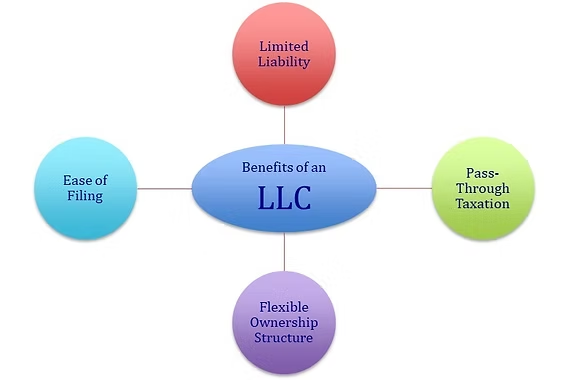
Forming a Limited Liability Company (LLC) in the United States offers several important tax advantages, making it one of the most popular business structures for entrepreneurs and non-residents.
One of the biggest benefits of an LLC is pass-through taxation. This means the business itself is not taxed separately. Instead, profits and losses are passed directly to the owner’s personal tax return, avoiding double taxation that often occurs in corporations.
LLC owners can also take advantage of various business deductions. These may include operational expenses, office costs, marketing, travel, and professional services. Proper bookkeeping ensures these deductions are correctly recorded and claimed.
Another advantage is flexibility in taxation. An LLC can choose how it wants to be taxed—either as a sole proprietorship, partnership, or even as an S-Corporation or C-Corporation in some cases. This flexibility allows business owners to optimize their tax strategy based on income and growth plans.
For non-residents, an LLC also provides simplicity in compliance compared to more complex corporate structures. However, proper setup and tax classification are essential to avoid unnecessary tax burdens.
Working with a CPA ensures that your LLC is structured in the most tax-efficient way. A professional can help you maximize deductions, reduce liabilities, and stay fully compliant with IRS requirements.
Overall, an LLC provides a powerful combination of tax efficiency, flexibility, and legal protection, making it an ideal choice for small business owners and international entrepreneurs entering the U.S. market.